Molecular Complexity by Spectroscopy
Experimental Assembly Theory using NMR, IR, and MS/MS measurements.
This project asks a simple experimental question: can molecular complexity be measured directly from spectra, without first solving the full molecular structure?
The work uses Assembly Theory to connect molecular structure, spectroscopic observables, and the probability that a molecule was generated by an unconstrained process (Jirasek et al., 2024). Molecules above an assembly index of roughly 15 are too complex to have formed by chance, which makes that threshold a practical marker of biological or technological origin. The informal “alien detector” nickname is memorable, but the stronger framing is broader: a spectroscopy-led way to quantify molecular complexity in unknown chemical samples.
Measurement Scheme
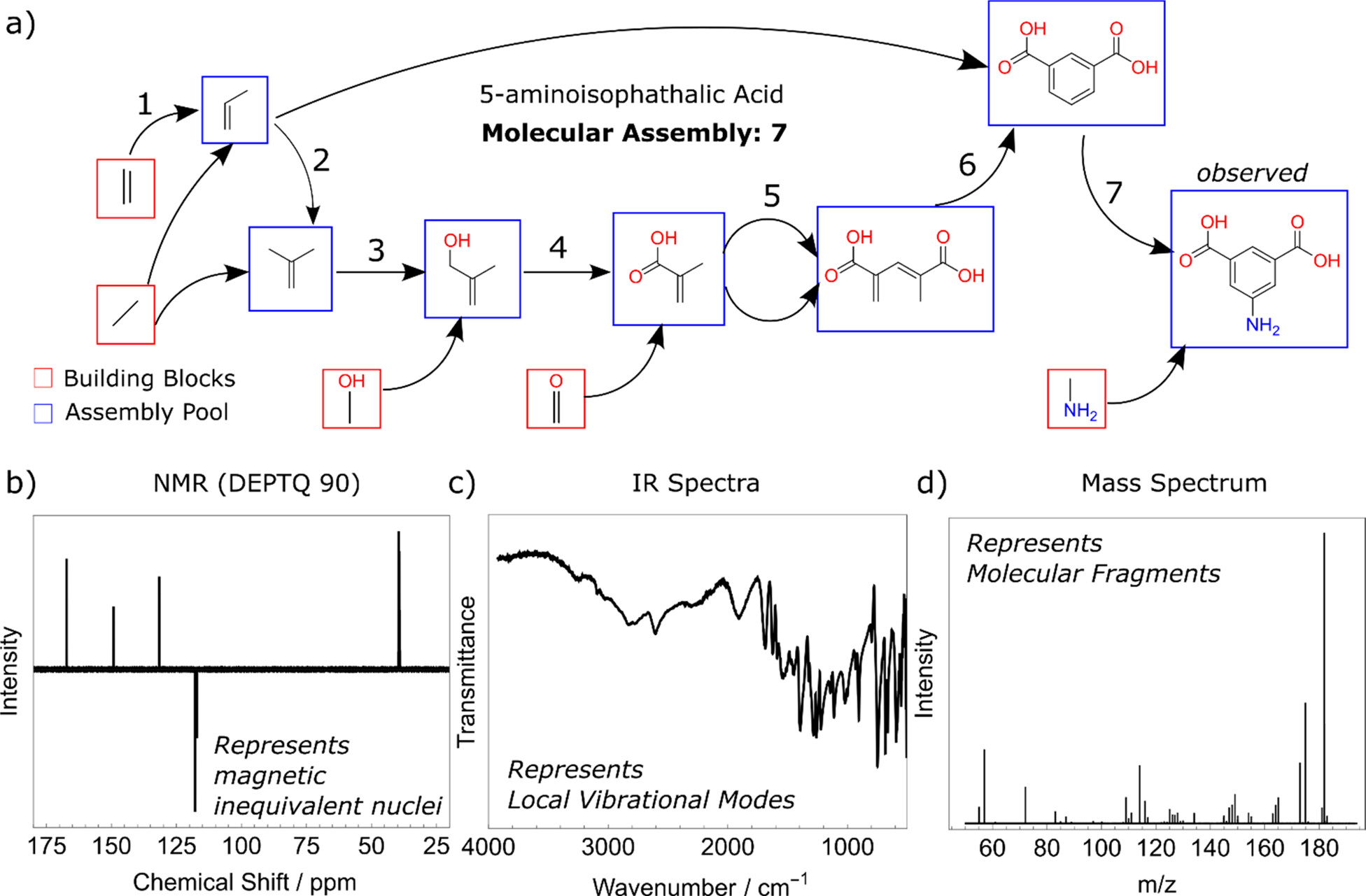
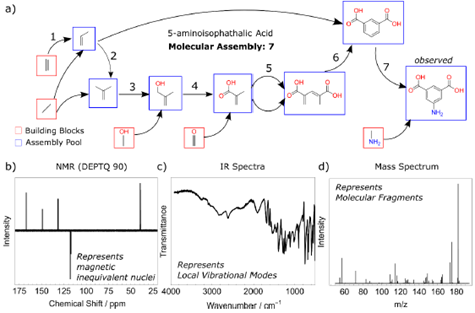
NMR reports on the number and type of distinct atomic environments. IR provides a compact fingerprint of functional group and vibrational diversity. MS/MS gives a fragmentation graph that can be compared with assembly pathways. Together these measurements make complexity a practical experimental observable.
Results
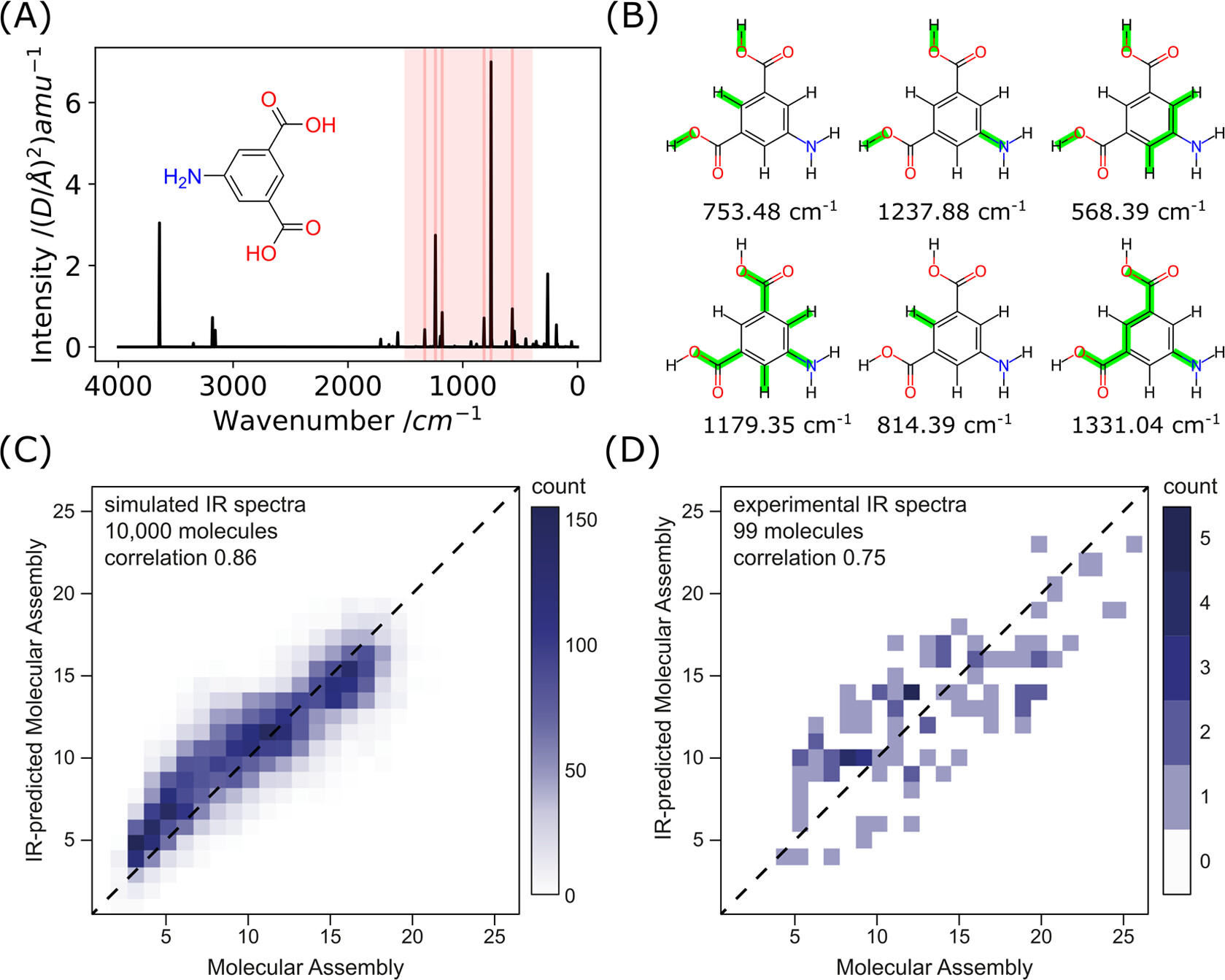
The method was tested on more than 10,000 molecules computationally and around 100 molecules experimentally. Combined across the three techniques, experimental estimates correlated with computed molecular assembly at 0.88 to 0.91, with individual techniques ranging from 0.73 to 0.87. The key technical result is that different instruments converge on a shared complexity estimate. That matters because it makes the method robust to the constraints of real samples and real instruments, and it let us separate high-complexity biomolecules from simple compounds of similar molecular weight.
Why It Matters
An experimental complexity metric is useful in astrobiology, origins-of-life chemistry, reaction discovery, and automated sample triage. It gives autonomous platforms a measurable target that is not just yield, purity, or structural identity.
References
2024
-
 Investigating and Quantifying Molecular Complexity Using Assembly Theory and SpectroscopyACS Central Science, May 2024